
Local SEO in Kenya (2026): How to Rank on Google Maps and "Near Me" Searches

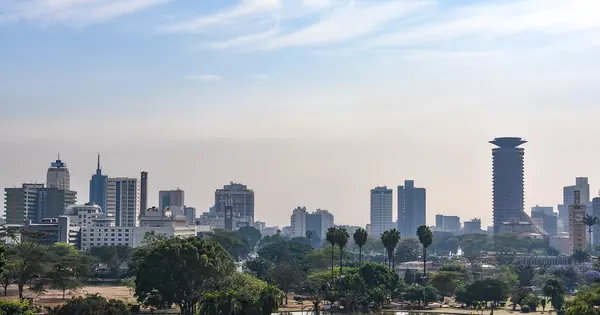
Photo: Nairobi City County Skyline by Antony Trivet, CC BY-SA 4.0. Cropped.
Key takeaways
- Google Business Profile is the foundation: right primary category, services, hours, photos, posts and replies to reviews.
- Reviews are a ranking factor and a sales tool, so ask every happy customer with a direct link.
- Your website needs one page per service and area you serve, not one page for everything.
- AI assistants increasingly answer local questions from the same signals, so local SEO now feeds AEO too.
How local search works in Kenya
When someone searches "plumber near me" or "salon in Kilimani", Google usually shows a map with three businesses (the "local pack") before the regular results. Those three spots get a large share of the calls and direction requests. Google picks them on three factors:
- Relevance: how well your profile and website match the search.
- Distance: how close you are to the searcher or the area named.
- Prominence: reviews, links, mentions and overall reputation.
You can't change where you are, but you can maximise relevance and prominence.
Step 1: Set up and complete your Google Business Profile
- Claim and verify the profile at business.google.com.
- Choose the right primary category (the most important relevance signal), then add secondary categories.
- Add services with short descriptions and prices or ranges where possible.
- Set accurate hours, including special holiday hours.
- Upload real photos: premises, signage, team, work. Add new ones monthly.
- Link your website, ideally to the most relevant page for that location.
- Post updates (offers, news, events) regularly.
- Answer questions in the Q&A section before customers ask them.
Step 2: Build a steady flow of reviews
Reviews influence ranking and are often the deciding factor for customers comparing three businesses on a map.
- Ask every happy customer, at the right moment (after delivery or a successful visit).
- Send a direct review link by WhatsApp, which gets far more responses than "please review us".
- Reply to every review, positive and negative, politely and specifically.
- Never buy fake reviews or review your own business; Google removes them and can penalise you.
Step 3: Keep your NAP consistent
NAP means Name, Address, Phone. Use exactly the same business name, address format and phone number on your website, Google Business Profile, Facebook, Instagram, LinkedIn and Kenyan directories. Inconsistent details confuse Google and AI systems about whether listings refer to the same business.
Step 4: Build local pages on your website
Your website should support your map listing with:
- One page per main service, describing what's included, prices, process and FAQs.
- Location pages for each town or area you genuinely serve (e.g. Nairobi, Mombasa, Kisumu), with local details, not copy-pasted text.
- LocalBusiness schema with name, address, phone, hours, coordinates and area served.
- An embedded map and clear directions on the contact page.
- Fast mobile speed, since local searches are mostly on phones.
See how we structure location pages in Nairobi web design and Mombasa web design.
Step 5: Earn local mentions and links
- Kenyan business directories and industry associations
- Local media features and interviews
- Partner and supplier websites
- Sponsorships, events and community projects
- Guest articles on relevant local sites
Local SEO and AI answers
Assistants like ChatGPT, Gemini and Google's AI Overviews increasingly answer "best [service] in [area]" questions. They draw on the same signals: your Google Business Profile, reviews, consistent business details, and clear website pages. Local SEO done well therefore also improves your chances of being recommended in AI answers. See SEO vs AEO and our AEO checklist.
A 30-day local SEO plan
| Week | Actions |
|---|---|
| 1 | Claim/verify Google Business Profile, fix categories, services, hours, photos; audit NAP everywhere |
| 2 | Ask your 20 best customers for reviews via WhatsApp link; reply to all existing reviews |
| 3 | Improve service pages; add LocalBusiness schema, map and location details |
| 4 | List in 5–10 relevant Kenyan directories with identical NAP; publish a first Google post and one helpful local article |
How to measure local SEO
- Google Business Profile insights: calls, direction requests, website clicks
- Search Console: impressions and clicks for local searches
- Review count and average rating over time
- Enquiries that say "found you on Google" (ask every new customer, and record it in your CRM)
Local SEO by type of business
| Business | Top local searches | Priority actions |
|---|---|---|
| Clinics and dentists | "dentist near me", "clinic in [area]" | Exact categories, insurance and SHA details, reviews, booking link |
| Salons and spas | "salon in Kilimani", "braids near me" | Photos of real work, price list, booking, frequent posts |
| Restaurants | "restaurants near me", "nyama choma [area]" | Menu, hours, photos, reservation link, review replies |
| Contractors and fundis | "plumber near me", "electrician [town]" | Service areas, phone call button, project photos |
| Real estate | "plots for sale [area]", "real estate company [town]" | Office profile, project pages per area, site-visit booking |
| Professional services | "accountant Westlands", "lawyer Nairobi CBD" | Service pages, credentials, consultations booking |
Common local SEO mistakes in Kenya
- Choosing a vague primary category such as "business" or "company"
- Keyword-stuffing the business name, which can get the profile suspended
- Different phone numbers on the website, Google and Facebook
- A website with no service or location pages
- Ignoring negative reviews instead of replying professionally
- Creating listings at virtual offices you don't operate from
Writing content that ranks locally
Beyond service pages, publish helpful articles that answer the questions local customers actually ask: "how much does a borehole cost in Kiambu", "best time to plant avocados in Murang'a", "what documents do I need to buy land in Kitengela". Use real local prices, places and examples. Each article should link to the relevant service page and end with a clear way to contact you. Content like this earns links from local sites, gets quoted by AI assistants and gives your Google posts something useful to share. One genuinely useful article a month beats ten thin ones.
Multi-location businesses
If you operate branches in several towns, such as a pharmacy chain, a SACCO or a clinic group, each real location needs its own verified Google Business Profile with its own phone number, hours and photos, and its own page on your website. Link each profile to its branch page rather than your homepage. Collect reviews per branch, and give each branch manager the review link and responsibility for replies. Keep the brand name identical across branches and add the location only where Google's guidelines allow it, for example "Brand Name – Westlands" only if that's how the branch signage reads. This structure lets each branch rank in its own area instead of all branches competing for the same searches.
Service-area businesses
Businesses that travel to customers, such as fundis, cleaners, movers, pest control and mobile mechanics, can hide their address on Google Business Profile and set service areas instead. Choose the towns and estates you really cover, not the whole country. Back this up with website pages describing your work in each main area, with photos from real jobs there and testimonials from local customers. Ask customers to mention the area in their reviews where it comes naturally, for example "fixed our borehole pump in Ruiru". Those details help both Google and AI assistants connect your business with the places you serve.
Should you hire a local SEO company?
You can do the basics yourself with the plan above. A specialist helps when you compete in crowded categories, serve several locations, or don't have time for consistent reviews, posts and content. Typical local SEO plans in Kenya cost about KES 15,000–30,000 a month; see SEO services in Kenya for what to expect, or our SEO company page for how we work.
Related articles


Frequently asked questions
What is local SEO in Kenya?
How do I rank on Google Maps in Kenya?
How long does local SEO take?
Do Google reviews help SEO?
Can I do local SEO myself?
Does local SEO help with ChatGPT and AI answers?
Get a professional website live in 7 days
Kavenacc builds fast, SEO- and AI-search-ready websites, web apps and mobile apps for Kenyan businesses, with M-Pesa payments and a 7-day launch guarantee.
Estimate your project cost →